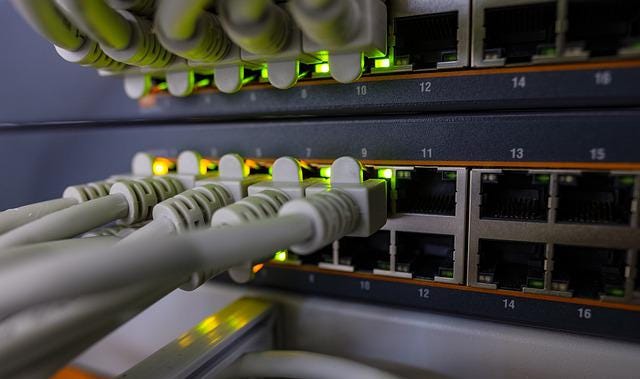
A network switch is a major element of every network implementation, yet there is no such thing as a universal switch. There are several sorts of switches, and the one you require is determined by a number of criteria. You won’t get the high-performance level you require if you choose the wrong switch. In an IT infrastructure, network switches and routers are critical components. Switches allow different devices to communicate with one another, while routers allow different networks to communicate with one another. Cyber Legend Technologies LLC is one of the leading Network Switches Supplier in Dubai.
Types of Network Switches
Modular switches
Modular switches allow you to add extension modules as needed, providing you more flexibility as your network grows. Expansion modules for firewalls, wireless connection, and network analysis are examples of application-specific expansion modules. Additional connections, power sources, and cooling fans may be possible. This switch gives you the greatest versatility at the most expensive price.
Fixed Network Switch
A fixed network switch is one that has a predetermined number of ports. These switches are not often modifiable or expandable in the same manner as module network switches are. The number of ports on fixed network switches is fixed. For example, the switch shown below has eight ports. This is a fixed network switch, which means you won’t be able to add extra ports to it.
Stackable switches
Stackable switches are fixed switches with a backplane cable interface that allows several switches to be linked together to form a single logical switch from two or more physical switches. This can speed up switch-to-switch data transfer while also simplifying stack administration because several physical switches are controlled as if they were a single switch. Some stacked switches can share power among themselves. As a result, if a switch in the stack loses its power source, it can continue to operate by drawing power from other switches in the stack.
Smart switches
Smart switches can be a cost-effective alternative to modular switches since they provide some administration and segmentation, quality of service, and security features. They aren’t as scalable as controlled switches, though. These switches are often used as the infrastructure for smaller networks or for networks with little complexity (while managed switches are utilised in the core).
Power over Ethernet (PoE) Switches
All of the switches so far have ports for connecting hosts to the network. Some switch types, on the other hand, feature ports that may provide both electrical power and network access to hosts. These are known as “Power over Ethernet” switches, because they offer both electrical and data power to connected devices. IP phones, distant WiFi routers, wireless Access Points, and other devices that do not have a power supply benefit greatly from PoE switches. A PoE switch, then, delivers both network connectivity (through gigabit ports) and electrical power over the same physical connector.

No comments:
Post a Comment